MPPT or PWM: choosing a Morningstar controller for remote sites
When MPPT pays for itself, and when a PWM controller is the better choice.
Load list, days of autonomy and derating for desert heat, step by step.
A wellhead system has one job: keep the instruments, valves and radio running every hour of the year without anyone on site. Sizing it is a short chain of decisions, and each one has to be conservative.
List every device with its voltage, its current and how many hours a day it runs: RTU, transmitters, solenoid valves, radio or modem, cathodic protection if any. Multiply to get watt-hours per day, then add 10 to 20% for wiring and controller losses.
Autonomy is how long the batteries must carry the load with no useful sun. Unattended desert sites rarely see long cloudy spells, but dust storms and soiled modules do happen. Three to five days is a common range; operators with strict uptime targets ask for more.
Battery capacity in watt-hours is daily load times days of autonomy, divided by the allowed depth of discharge. Then correct for temperature: batteries in a hot enclosure age faster, which is why the enclosure design matters as much as the chemistry.
Use the peak sun hours of the weakest month, not the yearly average. Hot modules produce less than their nameplate rating, and dust takes another share, so derate for both before choosing the number of modules.
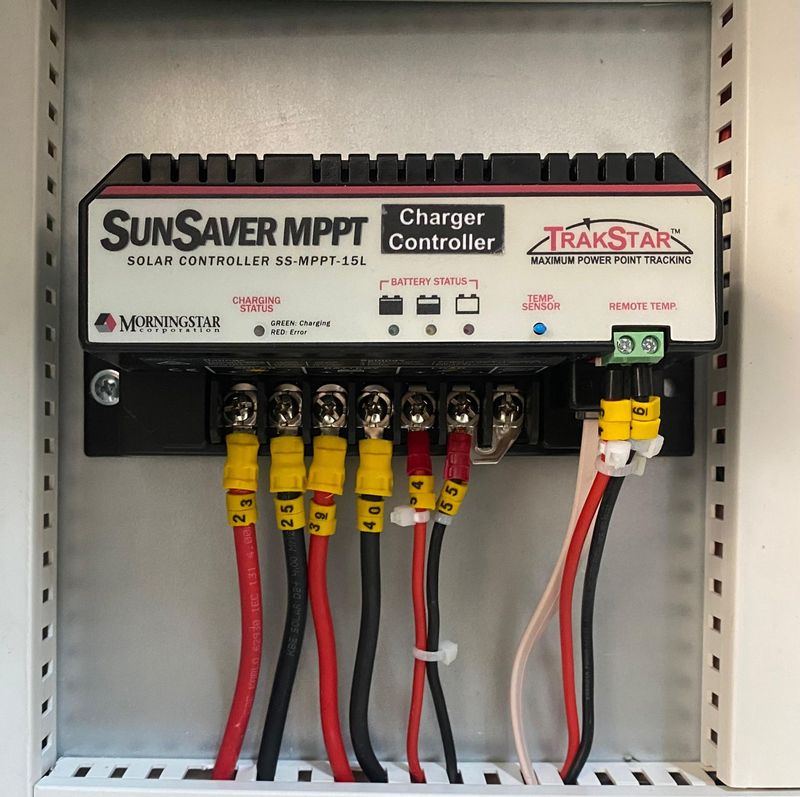
Check the array current and the open-circuit voltage at the coldest morning on site against the controller rating. On remote sites a controller that reports over Modbus lets the control room see a problem before it becomes an outage.
If you send us the load list and the site location, we will return a sizing sheet and a bill of materials.
When MPPT pays for itself, and when a PWM controller is the better choice.
Selecting glands, lugs and enclosures for desert and hazardous-area installations.
Send us the load and the site conditions. An engineer replies, not a call centre.